Backyard sport courts and basketball courts: what renewal files miss
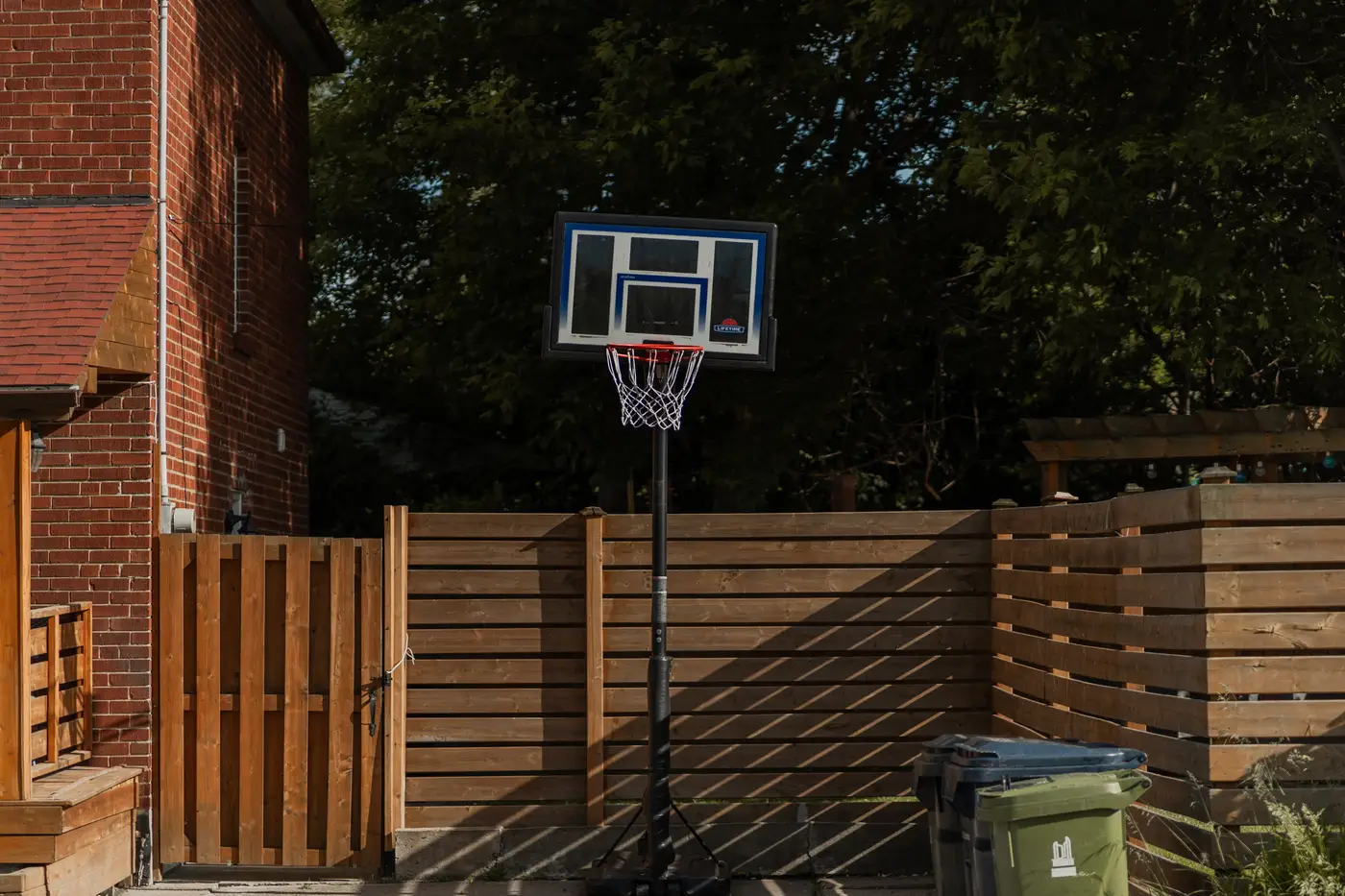
A concrete half-court or a fenced sport court doesn't get a permit pulled half the time, and it definitely doesn't get a phone call to the agent. The pool gets disclosed eventually, usually because a fence ordinance forces the issue. The trampoline shows up in a claim file more often than on an app. The backyard basketball court sits in a strange middle zone: visible from the street in a lot of neighborhoods, completely absent from the underwriting file, and exactly the kind of fixed structure that raises the attractive-nuisance question the moment a neighbor's kid goes up for a layup and comes down wrong.
Why sport courts don't show up on the application
Most policyholders don't think to disclose a court the way they'd disclose a trampoline or a dog breed. There's no checkbox for it on most state apps, and the policyholder who poured the slab three summers ago isn't thinking about liability, they're thinking about resale value and keeping the kids occupied. If a court came with the house at purchase, the current file might still be carrying the original application from a decade back, written for a yard that looked nothing like what's there now.
Add in the detached hoop structure, the sport-court lighting rig, sometimes a small fence or retaining wall to level the pad, and you've got several feature changes stacked on top of each other that never touched the file. None of that gets flagged until something happens on the court and the claims adjuster is standing on a slab that the underwriting file has no record of.
What actually changes at renewal
A fixed sport court changes the exposure in a few concrete ways. It's a gathering point, which matters for liability frequency more than most single features on the lot. It often comes with lighting, which extends the hours kids and neighbors are using it. And depending on grading, a court can shift water flow on the property, which raises its own drainage question for a different line entirely.
None of that shows up as a rate factor if the file doesn't know the court exists. The renewal underwriter working off the last application and a loss run has no way to know the exposure has grown unless something triggers a fresh look, a claim, an inspection order, a carrier audit. Most files just roll forward on the same information they had at binding, sometimes five or six renewals ago, while the backyard behind that address has been getting built out the whole time.
Catching it before the claim does
Most of this gets caught the hard way, after a loss, when the adjuster's photos show a structure nobody wrote up. By then it's a coverage dispute as much as a claims file, and it's the kind of thing that makes a renewal underwriter go back and wonder what else on that policy list hasn't been looked at since binding.
An annual sweep of the property from overhead imagery, like the one Liability Features runs, flags the fixed features that tend to cluster around a court: pools, trampolines, solar arrays, detached structures. The court itself isn't part of that flagged list. The gear around it usually is, caught and delivered back as a CSV keyed to the policy list rather than a report that has to be read property by property. A court with a shed and a pool behind the same fence is a different liability profile than the one on file from six renewals ago, and right now the only way most books find that out is a claim.
If the renewal file hasn't been refreshed against what's actually sitting on the lot, that's worth a look before the next cycle, not after the next loss.